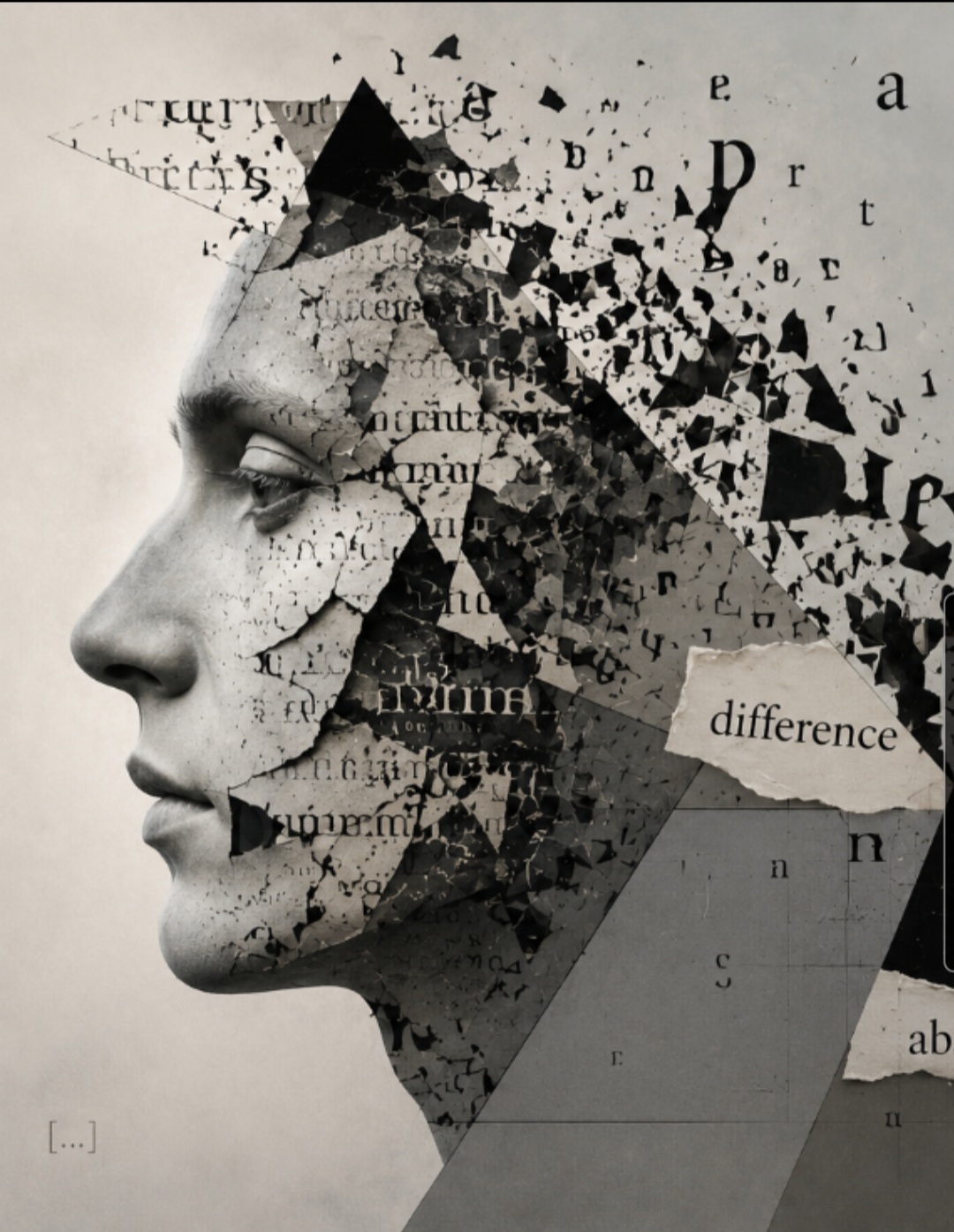
The engagement between modern philosophical approaches and religious traditions often reveals deep differences in how truth and meaning are understood. One such engagement arises between Deconstruction and Islam.
Deconstruction is a method of textual analysis associated with Jacques Derrida. It is considered as a postmodern approach to textual analysis which rejects the notion that meaning is unilateral, fixed and constant. In other words, it interrogates the stability of meaning and the structures that uphold it, while Islam affirms the existence of ultimate truth conveyed through the Qur’an and the teachings of the Prophet Muhammad ﷺ. This essay re-examines their relationship, highlighting both their fundamental differences and the limited scope for meaningful engagement.
Deconstruction emerged as a critique of the assumption that texts possess fixed and self-contained meanings. Derrida argued that language is inherently fluid, shaped by context, difference, and the interplay of signs. As a result, meaning is never fully stable or final; it is constantly “deferred” and open to reinterpretation. Deconstruction also challenges hierarchical oppositions—such as truth and falsehood—suggesting that these binaries are constructed and often conceal internal tensions. Its aim is not merely to dismantle meaning but to reveal the complexity and multiplicity embedded within texts.
Deconstruction represents a significant shift in how texts and meaning are understood. Rather than seeking certainty, it invites an inquiry into the structures that shape interpretation. Its influence extends far beyond philosophy, reshaping discussions in literature, art, and culture, while continuing to provoke debate about the nature of truth and meaning.
In contrast, Islamic thought is rooted in the belief that divine revelation provides a coherent and reliable foundation for knowledge. The Qur’an is regarded as the literal word of God, and its message is understood to contain enduring truth. Alongside it, the Prophetic tradition and centuries of scholarship in tafsīr (exegesis), fiqh (jurisprudence), and kalām (theology) form a structured system for interpreting and applying this revelation. Although Islamic scholars recognise the richness and depth of language, they do not accept that meaning is indefinitely unstable or detached from objective truth.
A very central point of contention lies in how Islam and deconstructivism view meaning. Deconstruction emphasizes that meaning is ever-changing and cannot be determined. This factor of indeterminacy appears to conflict with the Islamic conviction in that revelation communicates clear guidance. If meaning is endlessly deferred, the ability to derive consistent theological and ethical principles becomes uncertain. From an Islamic perspective, this undermines the purpose of revelation as a source of direction and certainty. While interpretation is acknowledged as a human activity, it operates within established boundaries that preserve the integrity of the text.
Another important difference concerns the role of authority.
Derrida introduced the notion that texts contain internal tensions and contradictions, which undermine any single, authoritative interpretation.
Deconstruction frequently aims to challenge and destabilize established frameworks of interpretation, revealing the ways in which power and context influence understanding. In contrast, Islam upholds a rigorous scholarly tradition in which authority is rooted in knowledge, methodological discipline, and continuity with earlier generations. This framework serves to preserve coherence and ensure that interpretation remains firmly grounded.
Consequently, the deconstructive impulse to dismantle authority can be seen as at odds with the Islamic emphasis on preserving a stable interpretive order.
Despite these differences, there remains a limited space for engagement. Islamic intellectual history demonstrates a longstanding awareness of linguistic nuance and interpretive depth. Classical scholars frequently explored multiple layers of meaning within the Qur’an, acknowledging that human understanding is necessarily partial. In this respect, there is a modest convergence with deconstruction’s sensitivity to textual complexity.
Furthermore, deconstructive methods may be cautiously applied to the study of human interpretations rather than the divine text itself. By examining how historical, cultural, and political factors influence exegesis, such methods can encourage a more reflective and critical approach to the tradition. This distinction—between the perfection of revelation and the fallibility of interpretation—allows for analytical inquiry without compromising foundational beliefs.
Nevertheless, this engagement must remain carefully limited. If deconstruction is extended beyond its role as a critical tool, it risks leading to interpretive relativism, which conflicts with the Islamic affirmation of objective truth. Any incorporation of such methods must therefore remain subordinate to the theological principles that define the faith.
In conclusion, deconstruction and Islam represent two distinct approaches to meaning and interpretation. One emphasises the instability of language and the contingency of meaning, while the other affirms the coherence and authority of divine revelation. Although their foundational assumptions differ, a cautious and selective engagement is possible at the level of human interpretation. By maintaining a clear distinction between revelation and its interpretation, it becomes possible to benefit from critical insight while preserving the integrity of Islamic belief.
Deconstructivism at best can be used very carefully as a powerful tool for exposing hidden assumptions and encouraging deeper analysis and reflection that enables one to think outside of the box and possibly provide new levels of insight to interpretation and some meaning.


Leave a comment