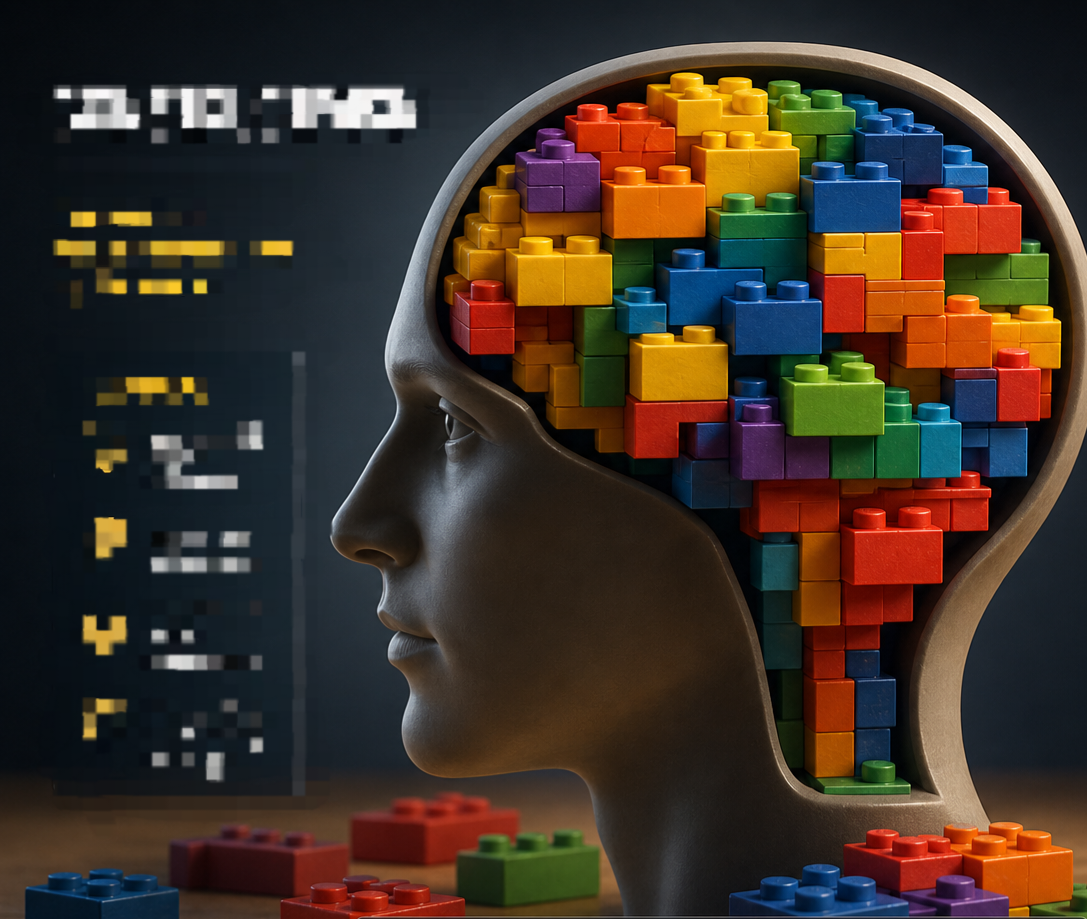
As a researcher, I am inclined toward the theoretical framework of constructivism, which has significantly informed my academic work. Having completed a graduate degree in Human Rights and Human Development, I have frequently employed constructivist reasoning to examine the foundations of human rights as long as constructivism guides it. From this perspective, human rights law is best viewed not as a static or universally fixed system, but as a dynamic and adaptable framework. In other words, using the principles of constructivism, human rights law can be implemented across diverse contexts and cultures or at least some version of human rights law, in a way that may pave the way for human development or at least an improvement in the fulfillment of human needs.
In a separate research, I have also demonstrated the need for the establishment of a similar framework for animals in that a set of rights may be drafted and implemented internationally. Such a framework would encompass animal welfare across both micro and macro dimensions—ranging from everyday human interactions with animals to the large-scale systems that shape their treatment, including industrial farming, global food production and distribution, and forms of entertainment such as zoos.
From a constructivist perspective, it seems only the rational thing to do. Of course, drafting some sort of international standard of guidelines and responsibilities would not be a difficult task as there are already a myriad of renowned initiatives and movements who have been advocating for animal welfare for decades. A sort of cooperation with such initiatives and experts could somehow result in the drafting of an exhaustive list of rights that cover acceptable conditions and circumstances for animals everywhere.
As for Islam and human rights, I have argued in favor of approaching interpretations and hadiths from a postmodern lens and using deconstructivism (Derrida’s approach) and constructivism to uncover new meanings without changing the truth (Allah’s word). My essays will frequently attempt to uncover new layers of meaning in a way that does not contradict any truth in the verses or Hadiths, rather adds a possibility one cannot deny using constructivism.
The relationship between constructivism and Islamic thought invites a careful and balanced examination within the field of Epistemology. Constructivism proposes that knowledge is actively formed through human experience, reflection, and social interaction. Islamic thought, by contrast, affirms that ultimate truth originates from divine revelation, while still recognising the essential role of human intellect in engaging with that truth. When considered together, these perspectives reveal both meaningful points of convergence and clear foundational differences.
Constructivism emerged prominently in modern philosophy and education through the works of thinkers such as Jean Piaget and Lev Vygotsky. Piaget emphasised cognitive development as an active process in which individuals construct knowledge through interaction with their environment, while Vygotsky highlighted the social dimension of learning, asserting that knowledge is shaped through language, culture, and collaboration. Central to constructivism is the rejection of knowledge as a passive reflection of reality; instead, it is viewed as the product of experience, reflection and social interaction. The human uses already established knowledge and views everything from a personal lens of already established knowledge. From then on, the human engages with the world and his already established knowledge evolves and is shaped and altered constantly.
Islamic epistemology, however, begins from a different premise. Knowledge is ultimately derived from revelation (waḥy), preserved in the Qur’an and the teachings of the Prophet Muḥammad ﷺ. This establishes truth as objective and independent of human construction. Yet, Islamic tradition does not portray human beings as passive recipients. Rather, it emphasises intellectual engagement through reason (ʿaql), reflection (tafakkur), and deep understanding (fiqh). While truth itself remains ثابت (unchanging), human comprehension of it unfolds gradually and may vary according to context, capacity, and effort.
This dynamic is evident in the classical disciplines of tafsīr (Qur’anic exegesis) and ijtihād (independent reasoning). Scholars such as Al-Ghazali and Ibn Taymiyyah demonstrated that engaging with revelation requires careful analysis, linguistic precision, and awareness of context. Differences among scholars in interpreting texts do not imply the absence of truth; rather, they reflect the depth and complexity of human understanding and of course the the depth of the Qur’an. In this sense, the process of interpretation mirrors constructivist insights, where knowledge develops through inquiry and intellectual effort.
Islamic educational traditions further illustrate this parallel. Learning has historically taken place within structured yet interactive environments, including teacher-student relationships, scholarly transmission chains (isnād), and communal study settings. These methods emphasise gradual development, dialogue, and mentorship. Such an approach resonates with Vygotsky’s view that knowledge is shaped through social interaction, highlighting a shared recognition that understanding is cultivated over time.
Despite these similarities, an essential distinction must be maintained. Constructivism, particularly in its more relativistic forms, may suggest that truth itself is shaped by human perception and social context. Islamic thought firmly rejects this idea. Truth, in Islam, is grounded in divine revelation and exists independently of human interpretation. While individuals may differ in their understanding, these differences do not alter the underlying reality. Human knowledge is therefore seen as an attempt to approach and comprehend a truth that is already established, rather than to create it.
A balanced synthesis can therefore emerge when constructivism approaches Islam through the confines of human cognition and learning processes, rather than as an explanation to the nature of truth itself. From this perspective, one may affirm that Islamic thought accommodates a constructivist understanding of how knowledge is acquired—through reflection, experience, and social interaction—while simultaneously maintaining that the source and substance of truth remain divinely ordained and immutable. This distinction preserves the integrity of Islamic theology while allowing for meaningful engagement with contemporary epistemological theories.


Leave a Reply