
This essay will attempt to explore one of my favorite verses in the Qur’an. It holds a special place for me because of the scope of its meaning. The imagery and metaphorical sophistication within the verse still leaves me in awe and wonder everytime I remember it or read it.
I discussed previously in my essay entitled “A Throne Upon the Sea – the Devil’s Base” how visiting the sea inspires feelings of excitement and fear. I would also like to add that visiting the beach also reminds me of the verse and I almost always contemplate it silently, as I appreciate the enormity of the water in my view.
The verse in Surah Al Kahf ( The Cave) reads:
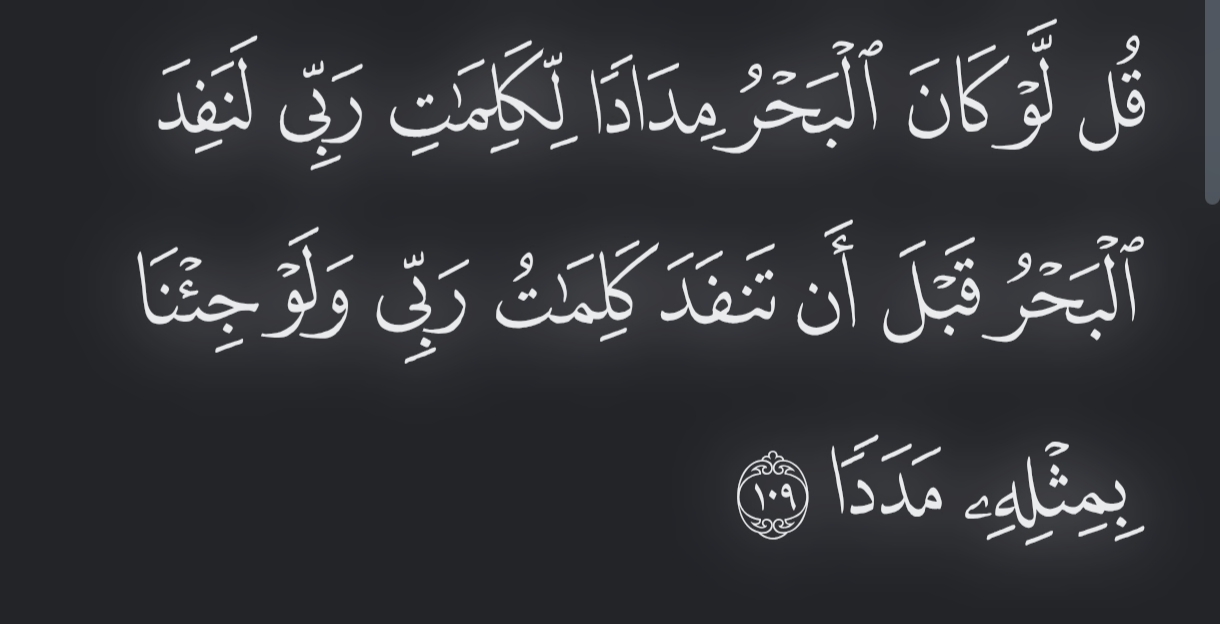
And translates to:
Say, ‘O Prophet,’ “If the ocean were ink for ‘writing’ the Words of my Lord, it would certainly run out before the Words of my Lord were finished, even if We refilled it with its equal.”
This verse compares Allah’s words to the sea in a surprising understatement.1 It essentially means that if the sea were ink for writing the words of Allah, it simply would run out and not be enough to convey his words. If the sea were to be replaced again and again, it still would not suffice. In this way, the understatement is created as the vastness of the seas as ink are little compared to Allah’s words.
It is a beautiful verse with perfect imagery and wording that only Allah can be responsible for. The reason for revelation (Sabab al-Nuzul) was in response to the Jews who were speaking to the prophet (s).
Jewish scholars—often described as rabbis from Medina approached the prophet (s) with three questions as a test of his prophethood, one of which concerned the nature of the soul (Rūḥ).
In response, he recited a verse from the Qur’an (Surah Al-Isra 17:85): “The Spirit is of the affair of my Lord, and mankind has been given only a little knowledge.”
The Jews then responded by saying, “You say, ‘And you have not been given knowledge except a little’. Yet we have been given the Torah, which is wisdom, and whoever is given wisdom has been given much good.”.
To that, the verse 109 from surah Al Kahf is reported to have been revealed to highlight how much knowledge and wisdom there is in Allah’s words and actions and nothing compares to it. 2 The Torah, the Bible and the Qur’an are merely a drop in the ocean.
The bigger idea was also that no matter how many scientific advances and discoveries are made by humans, Allah’s creation and infinite details will remain a mystery. Human knowledge and intellectual advancements will remain a drop in the ocean “You have not been given knowledge except a little”.
When reading the Qur’an, I agree with the position of many scholars that the Qur’an is revealed as a universal text for every time and place. That is not to say that the laws and morals should be changed according to the modern age we live in per se, but when reading the Qur’an, one must try to draw wisdom from the verses even though they were revealed for a past group. One can extract wisdom and guidance by reading the verses as though they were revealed to him/her. 3
It is a form of mindfulness towards the Qur’an. For example: the verse, “You have not been given knowledge except a little” was relevant then during the time of prophet Muhammad(s). However, despite every discovery and modern advancement made in technology, medicine, and the fields of anthropology, geography, and marine studies today, there is so much more to uncover. What we know today, is still just a drop in the ocean. In other words, we can consider that this verse speaks to us too and tries to humble us.
We are permitted to try to dive deeper into the depths of the verses and their significance. The Qur’anic text allows for ongoing reflection to continually reveal new layers of insight and meaning over time as human knowledge and scientific understanding expands. This allows it to engage with evolving social and scientific contexts while remaining meaningful and relevant up to the Day of Judgment.4
Thus verse 109 may prove this idea because as we mentioned earlier, it describes the infinity of Allah’s words. They are so many and no ink in this world is enough for them. It may be so because of the great wisdom and meaning behind them, the possibility of multiple meanings that can be extracted and the scope and reach of the words in that they are relevant across all times and places.
A similar and equally beautiful verse reads in Surah Luqman verse 27:
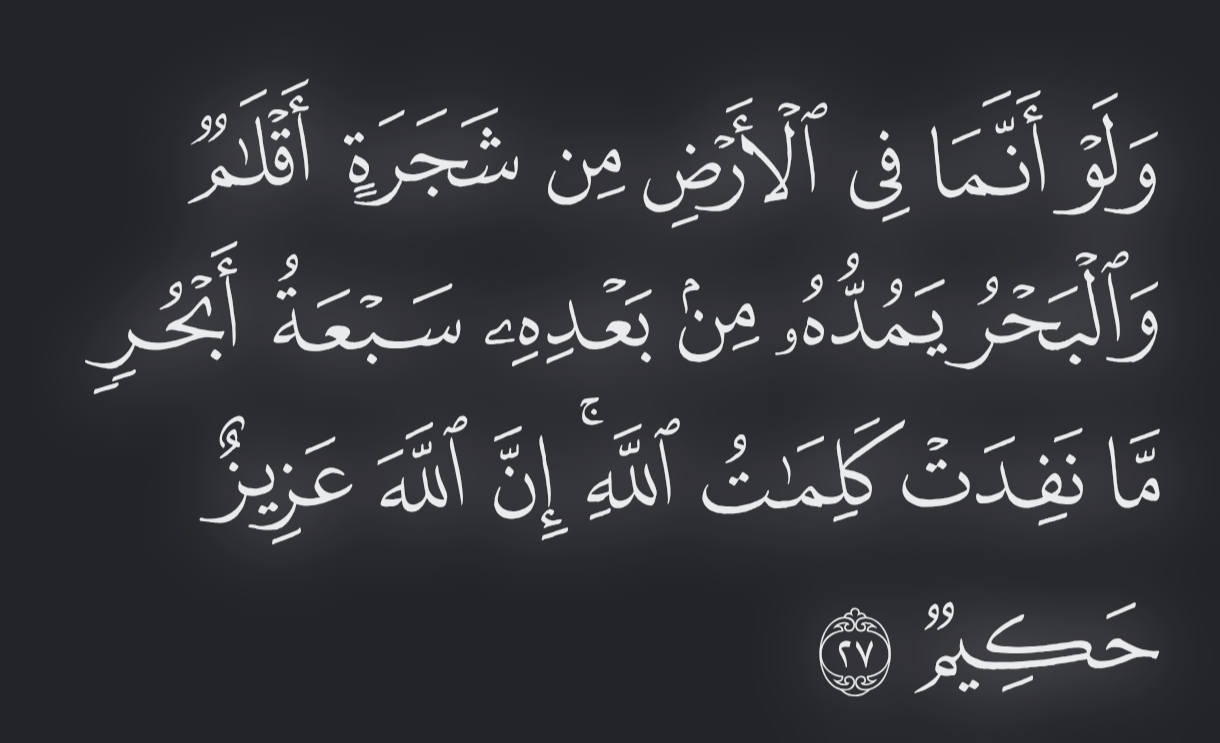
If all the trees on earth were pens and the ocean ‘were ink’, refilled by seven other oceans, the Words of Allah would not be exhausted. Surely Allah is Almighty, All-Wise.5
Verse 109 truly is one worth reflecting over and over again. What is more, this verse is placed towards the end of surah Al-Kahf after a long description of the Sleepers of the Cave, the two gardens, Moses and Al-Khider, Gog and Magog and Thul Qarnayn. All these stories still have ambiguous and mysterious undertones with many questions about them unanswered. We can try to uncover answers, but we will never truly know the truth and full story behind them which the verse also affirms implicitely. There is wisdom in the Qur’an and Torah and Bible, but we have been given so little knowledge. Perhaps as humans, we would not be able to fathom the extent of Allah’s words even if we wanted to. The next verse says:6
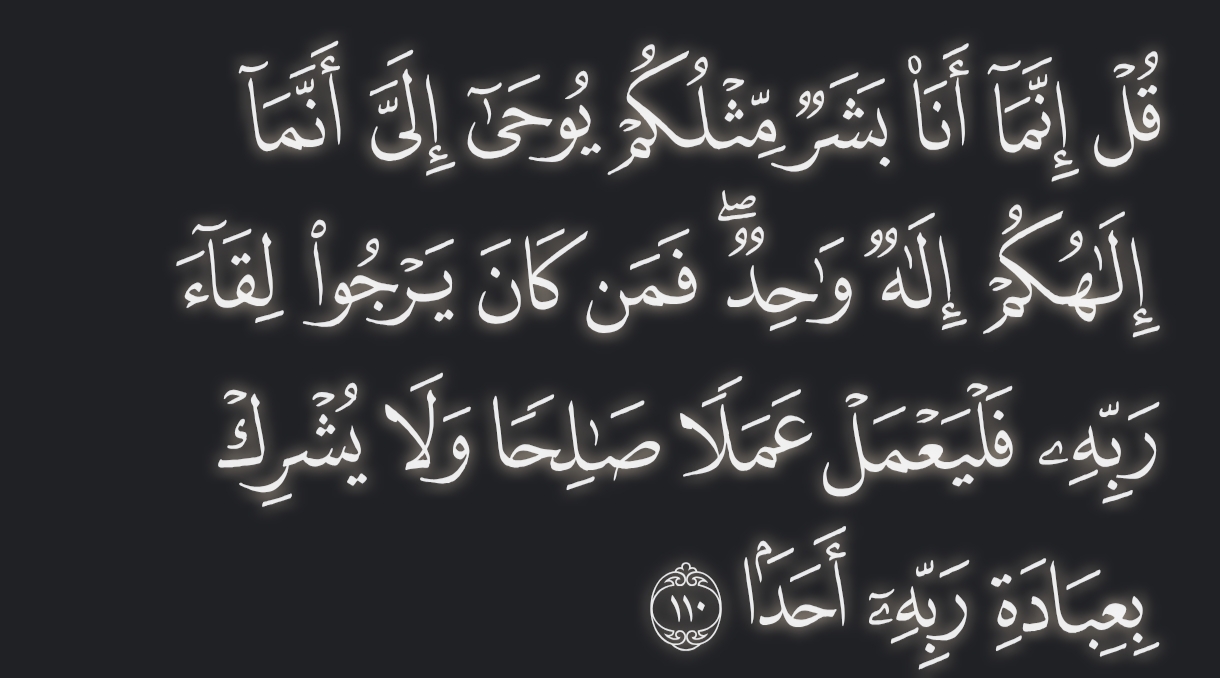
Say ˹O Prophet,˺ “I am only a man like you, ˹but˺ it has been revealed to me that your God is only One God. So whoever hopes for the meeting with their Lord, let them do good deeds and associate none in the worship of their Lord.”
The prophet tells the Jews who were testing him that he is just a human and revealing what Allah is saying. There is also an emphasis on doing good deeds and worshiping none, but Allah and with that the Surah ends.
What stands out the most is that this surah is said to protect the believer from the Antichrist. Based on scholarly hadith, if he memorizes the first 10 verses (or last), he will have protection from Dajjal’s (Anti-Christ’s) test. 7
Now, let’s think about the verse and try to find another meaning for it. It was sent to the jews, but why was it placed in surah al Kahf, the surah which is known to protect man from the trials of the Antichrist. Apart fro. The meysteries in the Surah, could there be another dimension of meaning or purpose?
Towards the end of time, life becomes harder for muslims and trials and temptations become rampant. Sin becomes easy and effortless. For this reason, when I read this verse, I also remember a hadith that says:
Allah’s Messenger (ﷺ) said:
Whoever says: “Glorified is Allah and praised is He” one hundred times a day, will have his sins forgiven even if they are like the foam of the sea.8
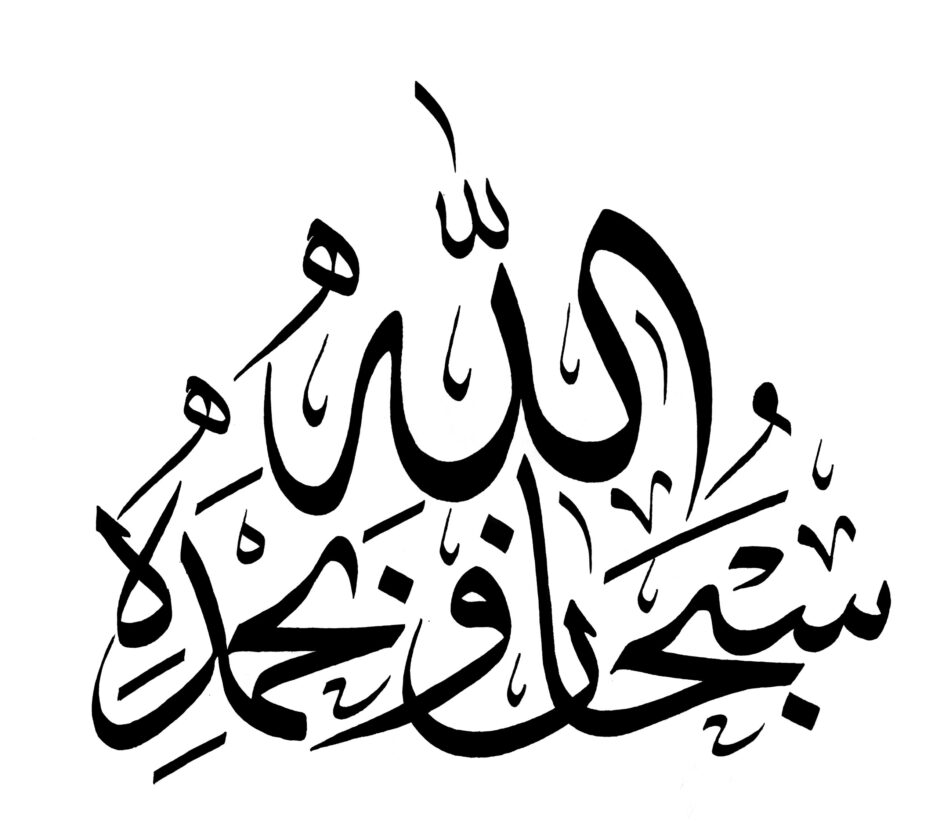
Subḥānallāhi wa biḥamdihi is a “thikr” which means a form of “remembrance”. Even the angels repeat it to Allah as a way of worship. 10
The point is though, such a thikr is so profound that saying it 100 times a day will erase all sins even if they were as much as the foam in the sea. I believe it goes back to the verse 109 in Surah Al Kahf. This three-word thikr is one of Allah’s “words” which should not be understated. If you recite Allah’s words, the ocean or sea of sins will replenish and continue to replenish as the foam is somewhat comparable to the ocean in its infinity.
Another important and similar thikr is
سُبْحَانَ اللَّهِ وَبِحَمْدِهِ عَدَدَ خَلْقِهِ، وَرِضَا نَفْسِهِ وَزِنَةَ عَرْشِهِ، وَمِدَادَ كَلِمَاتِهِ
This translates to:
[Allah is free from imperfection and I begin with His praise, as many times as the number of His creatures, in accordance with His Good Pleasure, equal to the weight of His Throne and equal to the ink that may be used in recording the words (for His Praise)].”
According to a hadith, the prophet (s) said it was heavier in the scales than hours of worship from morning until noon.11
Uncovering such a meaning does no harm and may encourage one to remember Allah in this day and age. It does not oppose past meanings, but wishes to add a new layer of possibility to the verse. It may point to the vast benefit of Allah’s words and his Qur’an, thikr and remembrance during the end of times.
Allah’s words are surely plenty and some of them we may not know. However, what we do know surely holds a huge weight in our scales of deeds according to Allah and this aspect of positivity is essential in this world we live in, “so do good” as the last verse says. We should not give up hope and seek Allah’s forgiveness through constant remembrance.
- https://theoceanofthequran.org/18-109/#_ftn21 ↩︎
- https://theoceanofthequran.org/18-109/#_ftn15 ↩︎
- https://yaqeeninstitute.org/read/paper/is-the-quran-still-relevant-today-the-timeless-universality-of-quranic-teachings ↩︎
- https://kitabat.com/%D8%A7%D9%84%D9%82%D8%B1%D8%A2%D9%86-%D8%A7%D9%84%D9%83%D8%B1%D9%8A%D9%85-%D8%B5%D8%A7%D9%84%D8%AD-%D9%84%D9%83%D9%84%D9%91-%D8%B2%D9%85%D8%A7%D9%86-%D9%88%D9%85%D9%83%D8%A7%D9%86-%D9%84%D8%A3%D9%86/ ↩︎
- https://quran.com/luqman/27?readingMode=verse-by-verse&translations=131 ↩︎
- https://quran.com/luqman/27?readingMode=verse-by-verse&translations=131 ↩︎
- https://sunnah.com/riyadussalihin:1021 ↩︎
- https://sunnah.com/hisn:254#:~:text=Home%20%C2%BB%20Hisn%20al%2DMuslim%20%C2%BB,Grade%20Reference%20Concise%20Detailed%20URL ↩︎
- https://freeislamiccalligraphy.com/?portfolio=suhan-allah-wa-bi-hamdihi&lang=ar ↩︎
- https://quran.com/az-zumar/75 ↩︎
- https://sunnah.com/riyadussalihin:1433#:~:text=These%20are:%20Subhan%2DAllahi%20wa%20bihamdihi%2C%20%60adada%20khalqihi%2C,%D9%84%D9%88%20%D9%88%D8%B2%D9%86%D8%AA%20%D8%A8%D9%85%D8%A7%20%D9%82%D9%84%D8%AA%20%D9%85%D9%86%D8%B0%20%D8%A7%D9%84%D9%8A%D9%88%D9%85%20%D9%84%D9%88%D8%B2%D9%86%D8%AA%D9%87%D9%86%E2%80%8F:%E2%80%8F ↩︎


Leave a Reply