
Bismillahi Ar-Rahman Ar-Raheem
We are commanded by Allah to recite Surah Al-Fatihah daily in every rakah of our prayers, yet do we truly give it the attention it deserves? In the rush of our fast-paced lives, many of us recite it absentmindedly, without fully reflecting on its meaning. We often overlook the importance of pausing between verses, and allowing ourselves the time to breathe, understand, and absorb its essence so that it can genuinely influence and transform our lives. The importance of pausing after every verse is essential and if one fails to pause, it is as if he simply does not understand the beauty of the Surah and likely does not have Khushoo’ in his salah (prayer). Khushoo is a state of deep focus, a submission, tranquility and humility towards Allah the almighty. 1
Essentially, Surah Al-Fatihah is a conversation between Allah and his servant. And this was reported by Abu Hurairah in Sahih Muslim Hadith 395a. 2
Here is a closer look at this dialogue. The translation of Surah Al-Fatihah can be found here3.
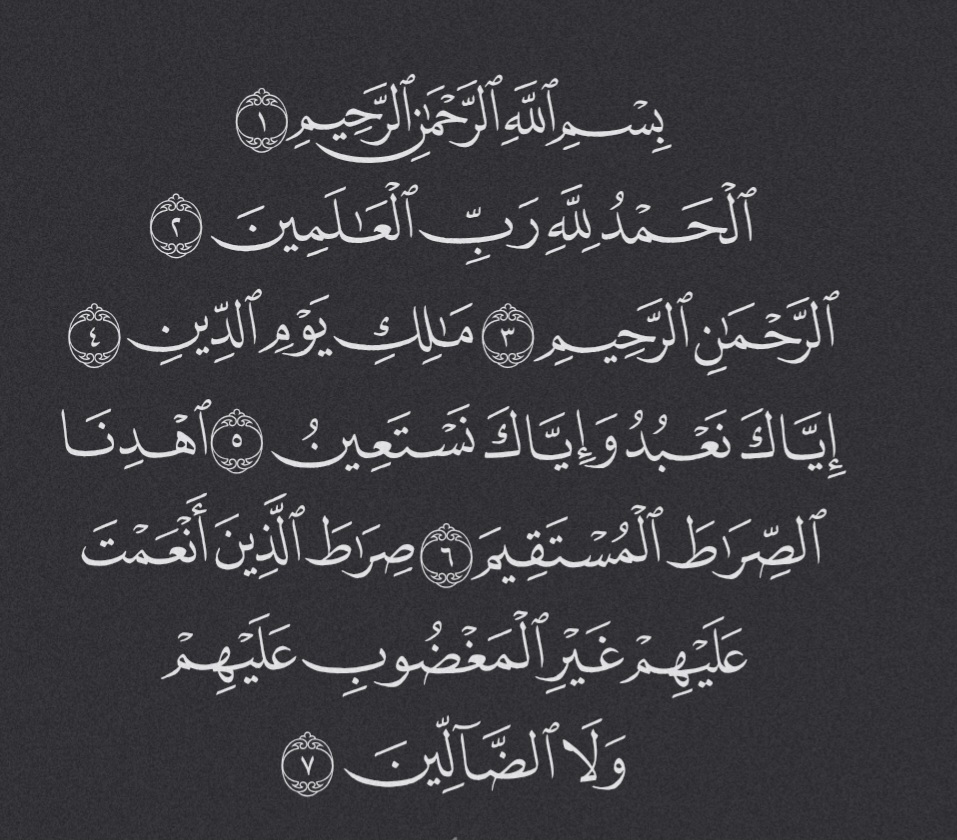
Surah Al Fatihah — The Opener
Servant: In the Name of Allah—the Most Compassionate, Most Merciful.
Servant: All praise is for Allah—Lord of all worlds,
Allah: My servant has praised Me.
Servant: the Most Compassionate, Most Merciful,
Allah: My servant has lauded Me.
Servant: Master of the Day of Judgment.
Allah: My servant has glorified Me. and sometimes He would say: My servant entrusted (his affairs) to Me.
Servant: You ˹alone˺ we worship and You ˹alone˺ we ask for help.
Allah: This is between Me and My servant, and My servant will receive what he asks for.
Servant: Guide us along the Straight Path, the Path of those You have blessed—not those You are displeased with, or those who are astray.
Allah: This is for My servant, and My servant will receive what he asks for.
In fact, it is so very important that a prayer that is performed without the recitation of Surah Al Fatihah is incomplete 4 or lacking 5.
Ibn ‘Abbas reported that while Gabriel was sitting with the Apostle (ﷺ) he heard a creaking sound above him. He lifted his head and said: This is a gate opened in heaven today which had never been opened before. Then when an angel descended through it, he said: This is an angel who came down to the earth who had never come down before. He greeted and said: Rejoice in two lights given to you which have not been given to any prophet before you: Fatihat al-Kitab and the concluding verses of Surah al-Baqara. You will never recite a letter from them for which you will not be given (a reward).6
Surah Al-Fatihah also brings the reader a reward every time he reads it and a special light and guidance from the heavens.
So imagine consciously starting your prayer with Surah Al-Fatihah and following it with the last two verses of Surah Al-Baqarah. The reward alone for choosing to pray one Rakat with those verses together is comparable to light and guidance from the heavens descending upon you as a form of protection.
Pausing while reciting Al-Fatihah is necessary otherwise the dialogue is one-sided and the believer will likely not reap the benefits of the greatest Surah. Think about it.
But let’s dive deeper and ask ourselves why this surah is the chosen one and why it is needed during every prayer. Allah ordained it of course by why?
In my view, Surah Al-Fatihah is not merely a recitation, but a profound dialogue between the believer and Allah. It serves as a sincere declaration by the servant, affirming their reliance on Allah’s guidance, assistance, and protection from Khutawat al-Shaytan—the subtle footsteps of Satan that lead one astray.
The Quran is full of conversations that Allah has with Iblees, no doubt. There are countless examples and verses. Not to mention, Iblees has vowed many times to lead humans astray.
Iblees said in Surah Al-Araf,
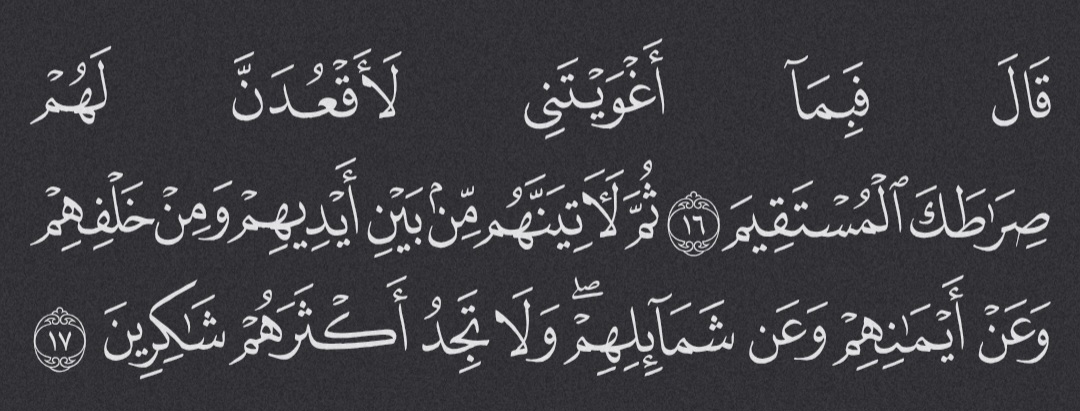
7:16
“He said, “For leaving me to stray I will lie in ambush for them on Your Straight Path.”
7:17
“I will approach them from their front, their back, their right, their left, and then You will find most of them ungrateful.”
Surah Al-Fatihah starts with greatfulness to Allah subhanu wa ta’ala.
He (Iblees) also said in Surah Al Hijr,
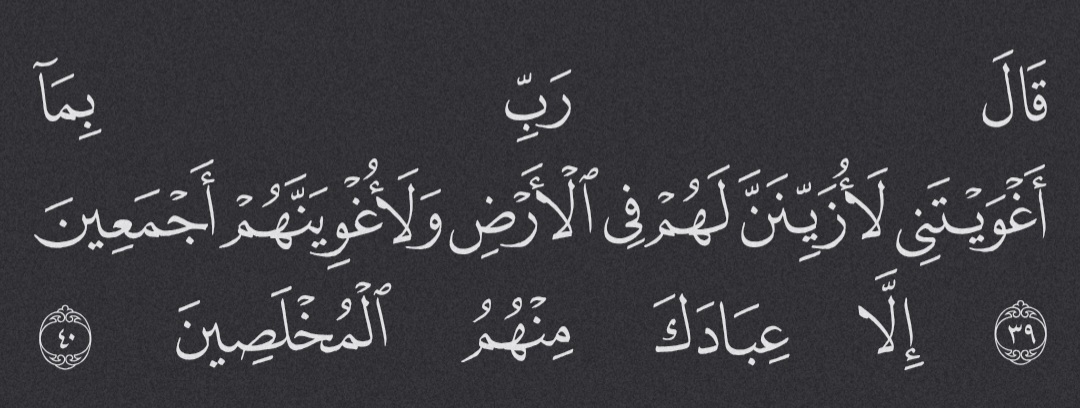
15:39
“My Lord! For allowing me to stray I will surely tempt them on earth and mislead them all together,
15:40
except Your chosen servants among them.”
and surah Al-Fatihah explicitly asks Allah to lead one towards the straight path.
Iblees also again vows in Surah Sad 38:82 to deter humans and lead them astray,
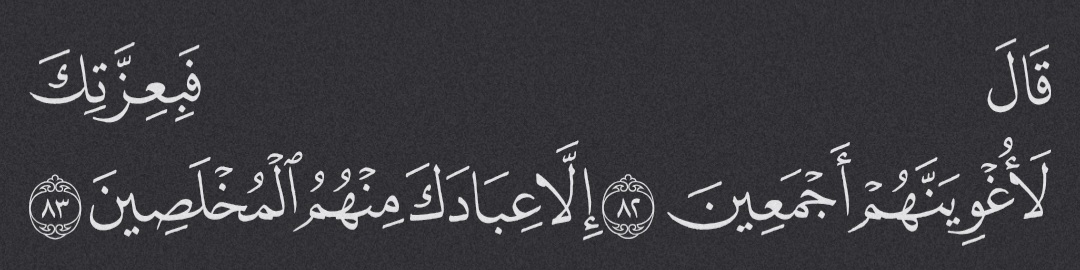
38:82
Satan said, “By Your Glory! I will certainly mislead them all,
38:83
except Your chosen servants among them.”
It is from my view that when Allah commanda us to recite Surah Al Fatihah that many times, there must be some wisdom behind it. Surah Al-Fatihah serves as a protection from Iblees and his envy and evil. It is also a prayer in and of itself, a duaa to Allah to protect us from Shaytaan’s “Khutawaat” and a genuine plea to Allah to make us his chosen servants who are not led astray by Iblees. The “Khutawat” are shaytaan’s footsteps, his stages of sin along with his ridden path.
In conclusion, Surah Al-Fatihah holds a unique significance, not only as a dialogue between Allah and His servants, but also as a powerful rejection of the promises of Iblees to lead humanity astray. It stands as an implicit response to Iblees and his forces, reflecting the believer’s awareness of his threat and their conscious plea to Allah for guidance, protection, and steadfastness on the right path.
As Einstein said in his third law of motion:
“For every action, there is an equal and opposite reaction.” 7
Surah Al- Fatihah is likely a reaction to all of Iblees’s promises and threats and for this reason may have been chosen as an opening for all prayers and only Allah knows best (Allahu A’lam).

- https://seekersguidance.org/answers/general-answers-feeds/what-is-the-meaning-of-khushu-humility-and-its-importance-shaykh-dr-muhammad-fayez-awad/ ↩︎
- https://sunnah.com/muslim:395a ↩︎
- https://quran.com/al-fatihah ↩︎
- https://sunnah.com/qudsi40:8 ↩︎
- https://sunnah.com/bukhari:756 ↩︎
- https://sunnah.com/bukhari:756 ↩︎
- https://en.wikipedia.org/wiki/Newton%27s_laws_of_motion ↩︎
 Baylassanreflections
Leave a comment