What is known as Islam today consists of a vast body of teachings, principles, facts, and Qur’anic verses, all derived from what are considered primary sources. These include the Qur’an, which has been preserved as the word of Allah; the Sunnah, which represents the actions and teachings of the Prophet Muhammad (peace be upon him); and the Hadith, which records his words and practices as transmitted through generations.
When interpreting any of these primary sources, one must ensure that no interpretation contradicts the established understandings of the Prophet (s) and recognized scholars.
With that in mind, the essays presented here do not seek to refute classical interpretations of the Qur’an and Hadith. Rather, they aim to explore additional perspectives and possible insights while remaining faithful to their original meanings.
These essays also strive to incorporate knowledge from both earlier and later periods, including insights from science and historical contexts, to deepen the understanding of certain hadiths, supplications, and verses. The goal is to enrich one’s comprehension and strengthen one’s connection to Allah, all while adhering to Islamic ethics and boundaries.
By reflecting on aspects of the world around us, one may uncover connections that help illuminate meanings within the Qur’an and Hadith—offering clarity to questions and shedding light on matters that may have once seemed uncertain.
The following hadith illustrates how certain interpretations may fall short, leaving readers with ambiguity rather than clarity. This essay will therefore seek to explore additional meanings and perspectives related to it.
Muhammad bin Rāfi’ narrated to me, Abd ur-Razzaq narrated to us, Ma’mar informed us, on authority of Ibn Tawus, on authority of his father, on authority Abd Allah bin Amr bin al-Ās, he said:
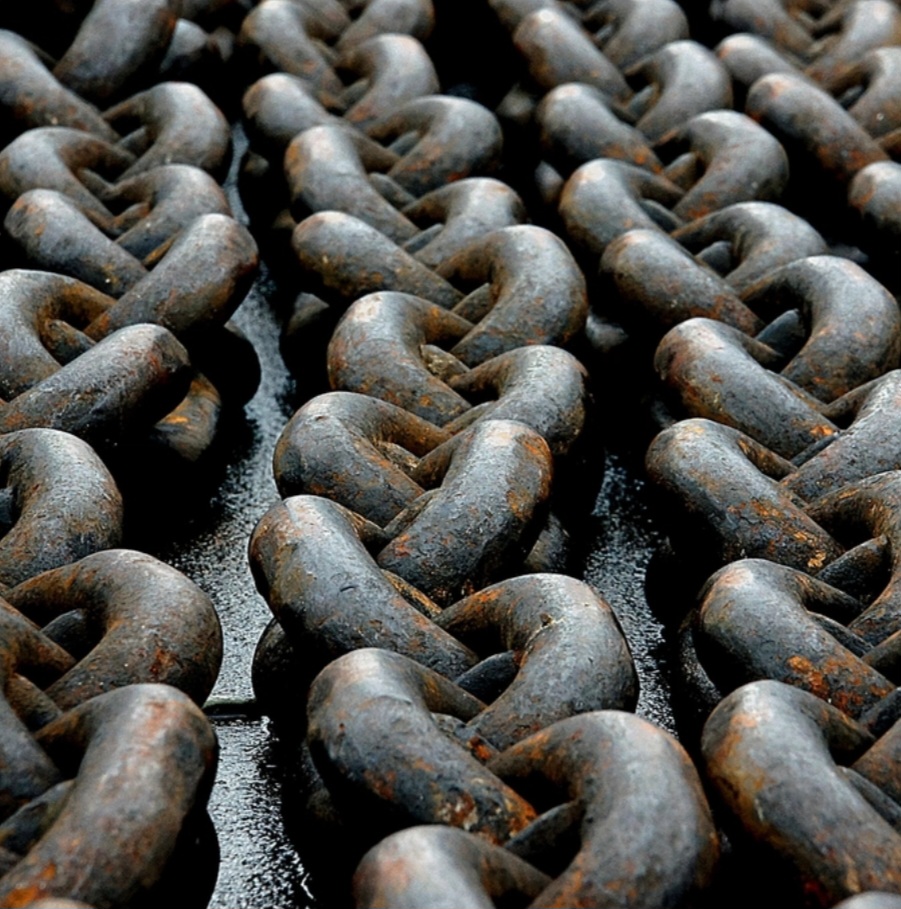
‘Indeed in the sea are devils chained up, whom Sulayman shackled and they are at the point of emerging. Then they will recite a Qur’an upon the people.’ 1
What are the current interpretations of this hadeeth? What is the meaning of “a qur’an” and why did they not say “the qur’an”? Could it be pointing towards the signs of the day of judgement?
First of all, it is important to note that “a qur’an” means it is not “the Holy Qur’an” we read and follow.
Some interpretations suggest that what is deemed as “a qu’ran” is actually false information coming from the people of the book. The prophet (s) said that information coming from people of the book can be divided into three categories: it is accepted since Islam corroborates it, it is rejected since Islam contradicts it, and the third category is neither proven or rejected by Islam so we cannot believe it, but we cannot deny it so it is permissible to speak of it or at least entertain the ideas included in it. 2
In conclusion, this interpretation says that the hadith is a warning to us to not accept any kind of “scripture” or “quran” from ignorant people and that there will be many people to come and claim that what they are saying is true, but we should only rely on the trusted primary soucrces of Islam and reputable scholars.
However, this essay would also like to view the hadith from another perspective.
Surah Al An’am 6:112
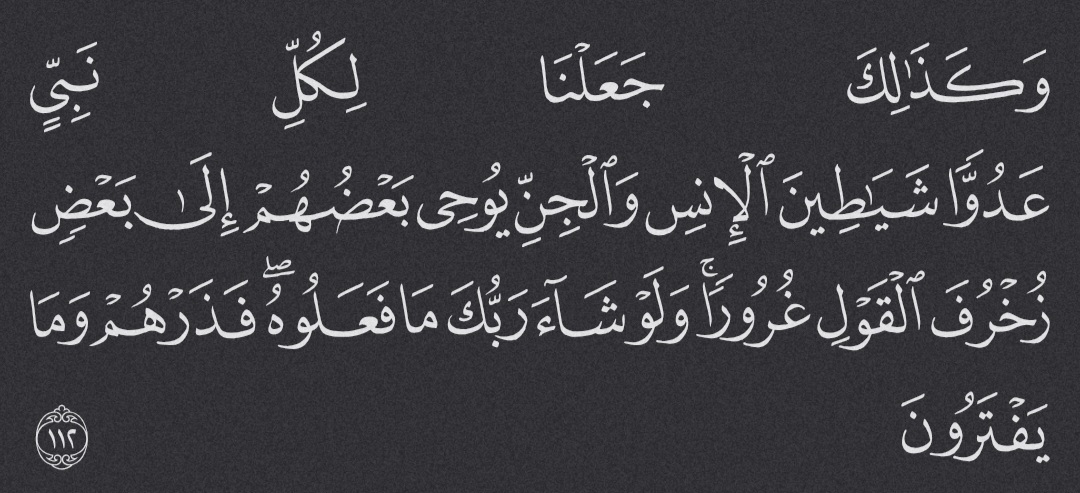
“And so We have made for every prophet enemies—devilish humans and jinn—whispering to one another with elegant words of deception. Had it been your Lord’s Will, they would not have done such a thing. So leave them and their deceit,”
In 2011, the world witnessed the emergence of the Islamic State in Iraq and Syria (ISIS) who represented an extremist transnational Jihadi movement that was responsible for heinous crimes and terrorist atracks that led the destruction of Iraq and Syria, not to mention large-scale damages internationally. 4
The group known as Islamic State of Iraq and Syria (ISIS) did, in fact, attempt to legitimise its actions through selective reinterpretations of the Qur’an and Islamic tradition. However, it is important to recognise that this was not a neutral or widely accepted interpretive effort. Rather, it involved extracting verses from their textual and historical context, often disregarding established principles of exegesis (tafsīr) and jurisprudence (fiqh) that have governed Islamic scholarship for centuries. 56
Classical Islamic scholarship—across its major schools—places significant emphasis on context, the circumstances of revelation (asbāb al-nuzūl), and the ethical framework of the Qur’an as a whole. ISIS’s approach frequently bypassed these safeguards, isolating verses related to warfare while neglecting the conditions, limitations, and moral constraints attached to them.7
With this, they managed to recruit thousands using their false “qur’an” and led to mass destruction.
With that, the essay has shed light on the possiblity that the hadith could be referencing ISIS w Allahu A’lam.
From another perspective, the hadith may also be referencing a certain type of black magic. What comes to mind when I think of devils reciting something is the infamous ayah in surah Al Baqarah that references the time of prophet Sulaiman (r).
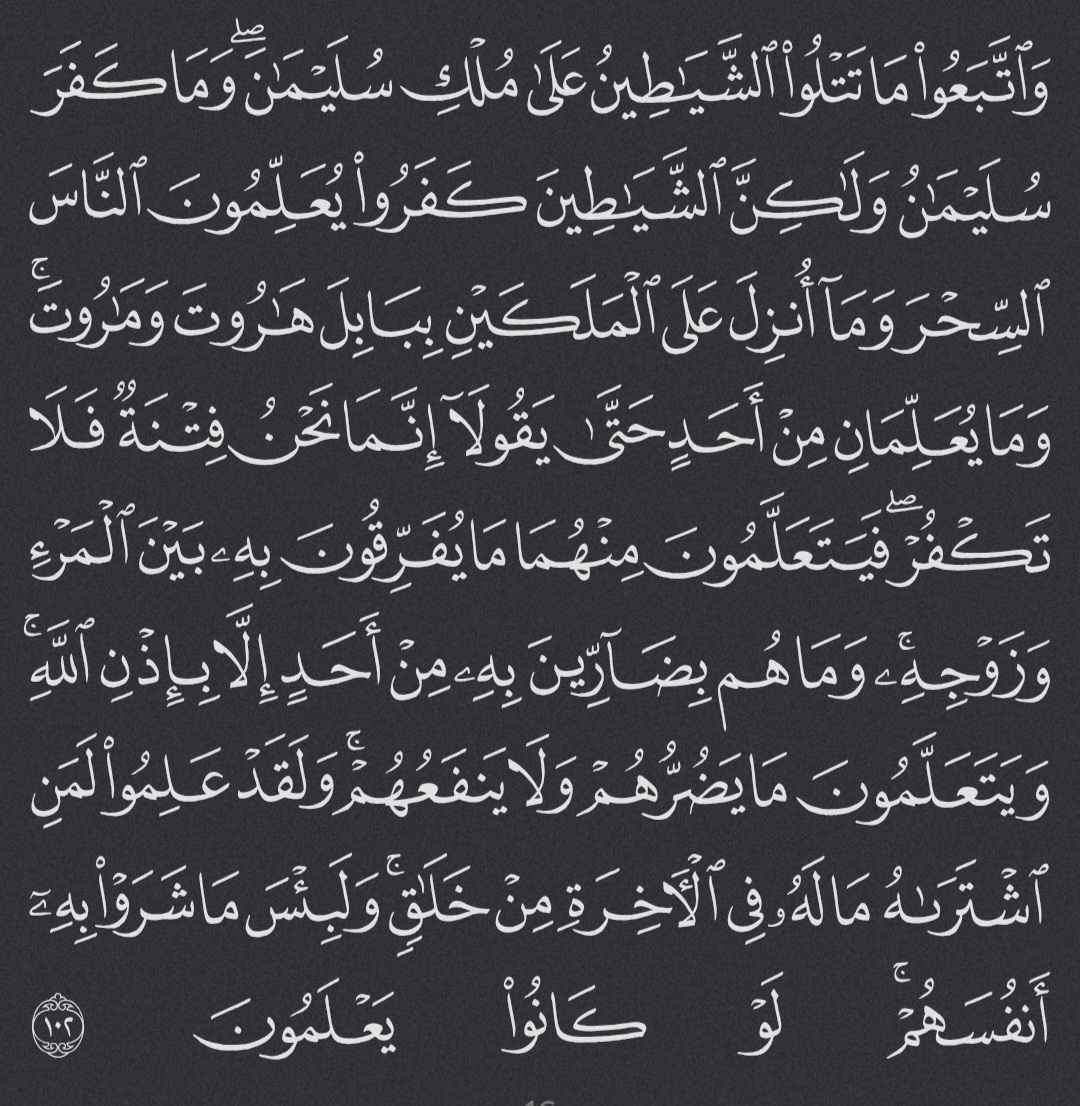
Surah Al- Baqarah verse 102
And they followed [instead] what the devils had recited during the reign of Solomon. It was not Solomon who disbelieved, but the devils disbelieved, teaching people magic and that which was revealed to the two angels at Babylon, Harut and Marut. But the two angels do not teach anyone unless they say, “We are a trial, so do not disbelieve [by practicing magic].” And [yet] they learn from them that by which they cause separation between a man and his wife. But they do not harm anyone through it except by permission of Allah. And the people learn what harms them and does not benefit them. But the Children of Israel certainly knew that whoever purchased the magic would not have in the Hereafter any share. And wretched is that for which they sold themselves, if they only knew.
The hadeeth referenced shackled devils from prophet Sulaiman’s time and the shackled devils may have been the ones who had taught people magic.
There is also a type of black magic that involves using quranic verses in charts, boxes written in reverse too and this would be considered a form of “Qur’an” for magic. However, it is merely a form of shirk and extreme blasphemy that is done to gain the favour of disbelieving Jinn and and devils. 9
So in all cases, these new interpretations of the hadith do not truly contradict the scholarly interpretations, but add a whole new perspective and level of understanding. What is the true meaning? Allahu A’lam (only Allah knows best).
- https://sunnah.com/muslim/introduction/17 ↩︎
- https://islamqa.info/ar/answers/468981 ↩︎
- https://quran.com/al-anam/112?readingMode=arabic ↩︎
- https://www.britannica.com/topic/Islamic-State-in-Iraq-and-the-Levant ↩︎
- https://academic.oup.com/bjc/article/60/6/1585/5843316 ↩︎
- https://scholarship.shu.edu/cgi/viewcontent.cgi?article=1900&context=student_scholarship#:~:text=The%20United%20States%20of%20America,by%20Muslims%20against%20non%2Dbelievers. ↩︎
- https://time.com/4138212/isis-and-islam/#:~:text=1.%20When%20ISIS%20employs%20passages%20from%20the,including%20Muslims%20who%20don’t%20fall%20in%20line. ↩︎
- https://quran.com/al-baqarah/102?readingMode=arabic
↩︎ - https://youtube.com/shorts/SJvmwEOYX-0?si=kTPAOlSqWjmxKT7a ↩︎


Leave a Reply